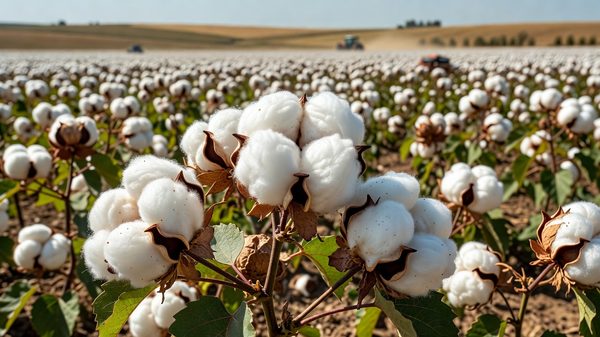
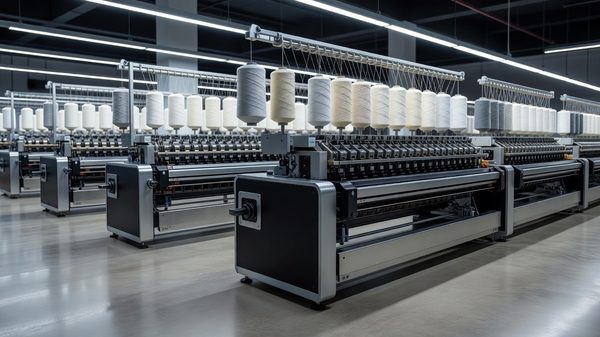
India’s spinning sector is operating inside a five-month duty-free import window that closes on 31 October 2026. The Ministry of Finance, Department of Revenue issued Notification No. 19/2026-Customs (G.S.R. 420(E)) on 30 May 2026, granting a temporary exemption from Basic Customs Duty and the Agriculture Infrastructure and Development Cess on imported cotton with effect from 1 June 2026. For mills that buy imported staple, the practical question is no longer whether the relief exists — it is how much of it can actually be captured before the notification lapses.
The headline number usually quoted is 11 per cent. That figure is the combined effect of a 5 per cent Basic Customs Duty, a 5 per cent Agriculture Infrastructure and Development Cess, and the Social Welfare Surcharge levied at 10 per cent of the BCD component. Removing BCD and AIDC removes the surcharge’s base along with it, which is why the exemption is worth close to the full 11 per cent rather than the 10 per cent that a simple addition of the two headline rates would suggest.
Why the Window Exists
The exemption is a supply-side response to a genuine physical shortfall rather than a general tariff liberalisation. The Cotton Association of India’s revised estimates for the 2025-26 season put domestic pressings at 337 lakh bales of 170 kg each, against a domestic consumption estimate of 348 lakh bales. That is a deficit of roughly 11 lakh bales before any allowance for opening or closing stock, and CAI simultaneously raised its import estimate by 13 lakh bales to 60 lakh bales for the season.
A mill consuming more than the country grows has two options: bid up domestic lint against every other mill doing the same thing, or import. The duty was the friction that made the second option uneconomic for most counts. Removing it does not create cotton, but it does let the marginal bale come from Brazil, the United States, Australia or West Africa at something closer to landed parity.
This is also not the first time the instrument has been used. Duties were lifted for a comparable window between August and December 2025, when elevated US tariffs were compressing Indian export margins. Treating the 2026 notification as a one-off would be a misreading; it is better understood as a recurring seasonal valve that the government opens when the domestic balance sheet tightens.
The Closing Date Is the Operative Fact
For procurement planning, 31 October 2026 matters far more than 1 June 2026 did. Two things happen around that date, and they are not coincidental.
First, the new Indian crop begins arriving. Second, the Cotton Corporation of India begins minimum support price procurement on 1 October 2026 in any market where prices fall below the notified MSP. The duty-free window has been drawn to expire precisely as domestic supply returns and the state becomes an active buyer. The policy intent is to bridge the lean season without undercutting growers at harvest.
The operational consequence is a transit-time problem. A customs exemption of this kind attaches to the clearance event, not the purchase order — the standard reading is that the bill of entry must fall inside the notified period. Ocean freight from the US Gulf or Brazil to Indian west-coast ports runs several weeks before port congestion and documentation, and Australian shipments are not materially faster. A contract signed in early October may well arrive to a bill of entry dated November, at which point the full duty applies to cotton bought on duty-free economics. Mills that have not already closed their import book for the window are, in effect, buying transit risk rather than cotton. Any mill treating the deadline as a purchasing deadline rather than a clearance deadline should confirm the position with its customs broker before committing.
What It Does Not Fix
Duty relief lowers the landed cost of imported lint. It does nothing about the three constraints that more commonly determine whether a spinning mill is profitable in a given quarter.
It does not address working capital. Imported cotton is typically bought against letters of credit with quantities and lead times that suit large integrated mills far better than they suit the MSME segment. A 11 per cent saving on a cargo a mill cannot finance is not a saving.
It does not address quality matching. Import parity is calculated on a benchmark grade, but a mill spinning a specific count against a specific customer specification needs a particular staple length, micronaire and strength profile. Substituting imported for domestic lint is a technical exercise, not a price arbitrage, and the trash and contamination profile of imported bales changes the blowroom and carding waste assumptions that mills cost their yarn against.
It does not address downstream demand. Cheaper raw material at the spinning stage is only useful if yarn can be sold, and the pass-through in either direction is imperfect. Where downstream weaving and garmenting demand is cautious, a lower input cost is competed away rather than retained as margin.
The Position Going Into November
CAI has projected a roughly 7 per cent rise in cotton acreage for the 2026-27 season, which if realised would narrow the structural gap between what India grows and what its mills consume. That is the medium-term answer to a problem the duty exemption addresses only tactically.
For the remainder of this window, the useful discipline for a mill is to separate the two decisions that the exemption tends to blur together. The first is whether imported cotton is the right fibre for the order book — a spinning question, answered on staple and micronaire. The second is whether the duty saving is capturable given clearance timing — a logistics question, answered on the calendar. Mills that answered the first question in June are now working purely on the second. Mills still treating the exemption as an open opportunity in mid-August have a narrower runway than the 31 October date suggests, because the date that governs is the one stamped on the bill of entry.
Sources: Notification No. 19/2026-Customs, G.S.R. 420(E), Ministry of Finance, Department of Revenue, 30 May 2026; Cotton Association of India revised 2025-26 crop, consumption and import estimates; Commission for Agricultural Costs and Prices MSP notifications for cotton season 2026-27.