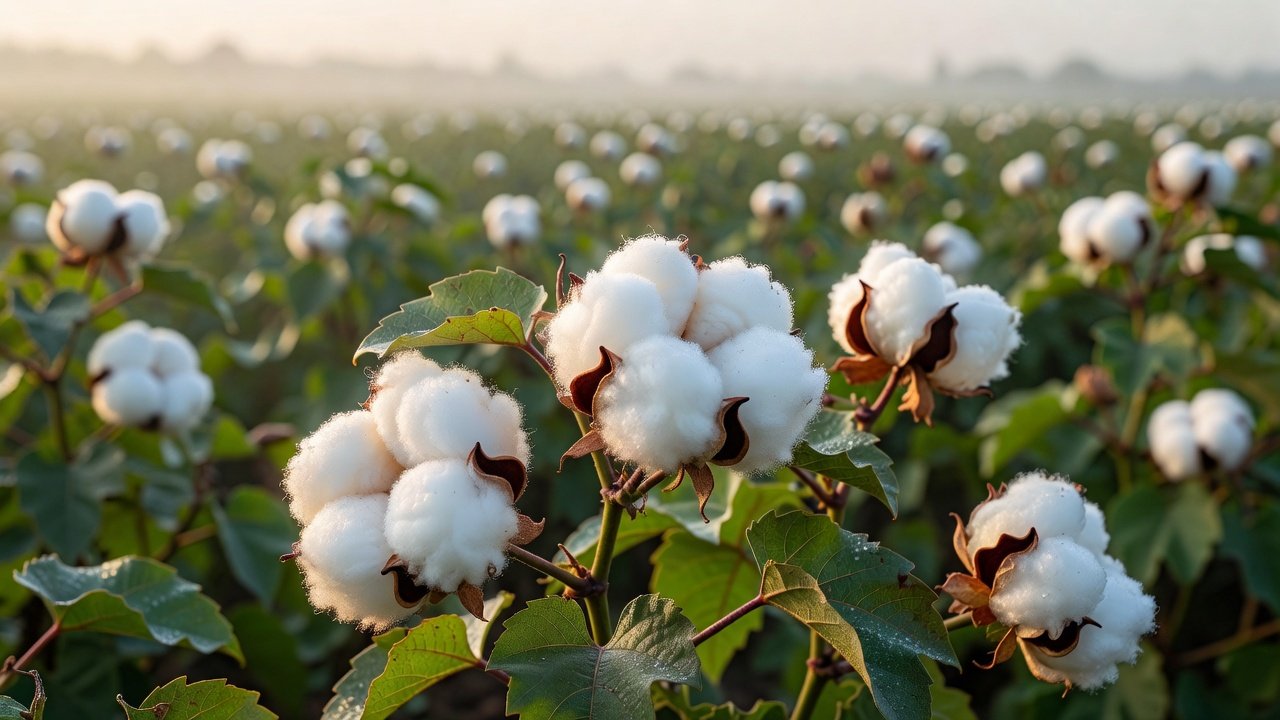
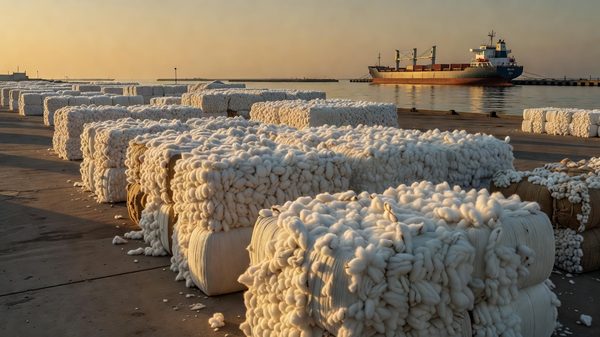
A figure is circulating in the Indian cotton trade: that exporters have contracted 2.5 to 3 million bales for China for the season starting in October, up from about 800,000 bales the year before. If true, it would be a major new claim on Indian lint. The problem is that the figure, as we can trace it, does not come from this season. The more useful exercise for a mill buyer is to test the claim against the supply numbers that are actually available.
Where the 2.5 to 3 Million Bale Figure Comes From
The claim is attributed to Atul Ganatra, then president of the Cotton Association of India, and appears in an Outlook Business item that also quotes contract values of Rs 4,500 to 5,000 crore. The page currently displays an update stamp of 28 May 2026, which is why it surfaces in searches as recent. But the underlying article is dated 10 April 2018 and its figures describe the season starting in October of that year, in the aftermath of China’s tariff moves on US cotton. We found no 2026 primary source, whether from CAI, the Ministry of Textiles or an exporter, repeating the 2.5 to 3 million bale number for 2026-27.
The sensible conclusion is that this number should not be used as a current forecast. We treat the 2018 history as a reminder of what a China-driven export pull can look like, not as evidence of one now.
What the 2025-26 Balance Sheet Says
The CAI’s August 2026 estimates put India’s 2025-26 exports at 15 lakh bales, 1.5 million bales of 170 kg, down from 18 lakh the previous season, with about 12.25 lakh shipped by 31 July. Against production of 339 lakh bales, consumption of 348 lakh and imports of 62 lakh, India has been a large net importer this season. A 2.5 to 3 million bale shipment to China alone would be roughly double India’s entire export estimate for 2025-26. It is not impossible in principle, but it would mark a break from the pattern, and nothing in the current balance sheet points to it.
CAI’s estimate of closing stock at 93.59 lakh bales for end-September 2026 is the other number that frames the question. By our arithmetic, that is a little over three months of mill consumption. A stock that large is the condition under which Indian exports become viable: it gives sellers room to ship without immediately starving domestic mills.
A Net Importer Selling Abroad
The structural point is easy to miss. In 2025-26 India imported about 62 lakh bales and exported 15 lakh, a net inflow of roughly 47 lakh bales, which is why duty waivers were needed in the first place. An exporter shipping lint to China while mills are asking Delhi for duty-free imports would be selling abroad what the domestic industry is simultaneously importing. That can happen when grades and prices differ, but it narrows the political and commercial room for a large export programme, and it is one more reason to ask for documentary evidence before accepting a headline volume.
What China Might Actually Pull
The demand side is easier to document. The US Department of Agriculture’s preliminary forecast, as reported in trade coverage, put China’s 2026/27 imports at 7.0 million bales, the highest since 2023/24 but well below the 15 million of that year. China has also been drawing on reserve stocks built during its last import surge, which tempers the pull. Weather damage in Chinese growing provinces is a possible upside risk, though we could not confirm its scale.
Where is China buying? Brazil’s industry association, Abrapa, reported that China was the largest destination for Brazilian lint in 2025/26, at about 770,500 tonnes or 23% of Brazil’s record exports. That tells us China’s mills have established alternatives. Whether Indian cotton competes depends on price and logistics. An Indian trade source has argued that shipments from India reach China in about two weeks against three to six weeks from other origins, which is a real advantage, but the same piece carries the questionable 2018 contract figure, so we treat it with caution.
What an Export Surge Would Do to Domestic Supply
Suppose an export pull did materialise. The mechanism for domestic mills is straightforward even without precise volumes:
- Price. Export demand adds a buyer at the margin. With domestic prices already moving thousands of rupees per candy in a week in mid-October, a new competing buyer would add to that volatility.
- Grade. Exporters would compete with mills for the same clean, mainstream-staple lots, so quality supply could tighten before headline volumes do.
- Policy. India has swung between encouraging imports through duty waivers and restricting exports. An export spike during a period when mills are pressing for duty-free imports would be a policy contradiction the government would have to address.
None of this is arithmetic to rely on today. It is a map of what to watch if credible export data appears.
What Mills Should Track
The CAI’s monthly export estimate is the first place a genuine China-bound surge would show. A move in the export estimate from 15 lakh bales to well above 20 lakh bales, the first revision of the 2026-27 balance sheet, or a pattern of exporter sales reported by the trade would be real evidence. Direct reports from named exporters or customs data would be stronger still.
The India-to-China commercial picture does not appear to be a 2026 export boom so much as a recycled headline. Mills planning raw-material cover for the winter are better served by the domestic variables that are verifiable now, the pace of arrivals, the fate of the duty exemption on 31 October and the behaviour of CCI at support-price centres, than by a China contract that, as far as we can establish, belongs to a different season.
Sources: Outlook Business item attributed to Atul Ganatra, Cotton Association of India (original publication 10 April 2018; page update stamp 28 May 2026); Cotton Association of India 2025-26 estimates reported 12 August 2026; USDA preliminary 2026/27 China import forecast as reported in trade coverage (secondary, figures unverified against the primary release); Abrapa Brazilian export data reported 21 August 2026 and 1 September 2026.